India is looking to expand its international trade partnerships, with a focus on establishing trade agreements that cover a significant share of the global economy. The initiative reflects the country's broader efforts to strengthen its position in international markets, improve access for domestic businesses and create new opportunities for exporters across multiple industries.
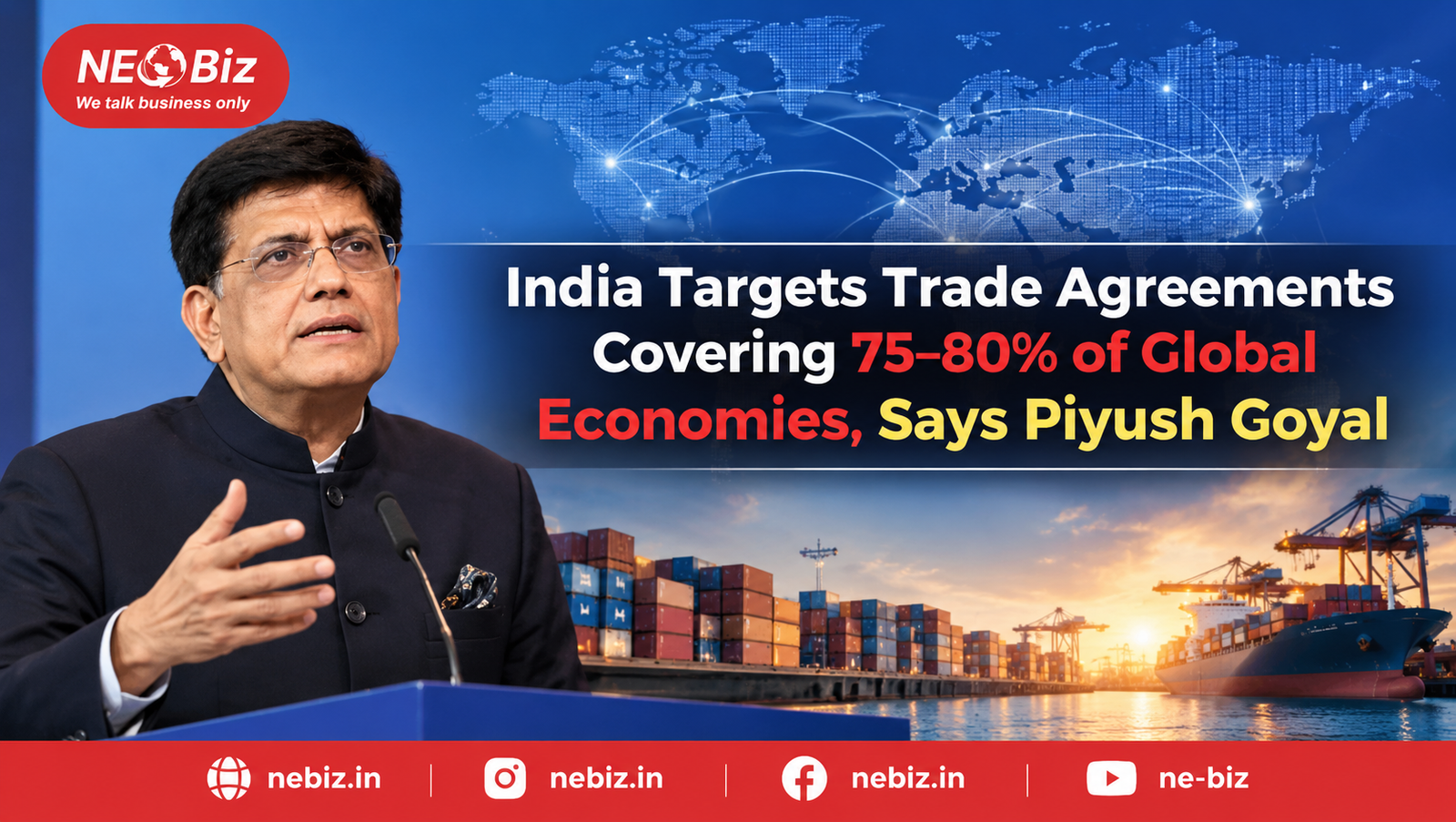
Union Commerce and Industry Minister Piyush Goyal has highlighted India's ambition to develop trade connections covering approximately 75–80% of global economies. The approach underscores the growing importance of international economic partnerships as India seeks to expand its export base, attract investments and strengthen commercial relationships with countries across different regions.
Trade agreements play an important role in facilitating cross-border commerce by establishing frameworks for market access, tariffs, investment and cooperation between participating economies. For Indian businesses, these arrangements can help reduce trade barriers, improve the competitiveness of domestic products and create opportunities to reach customers in new markets. They can also provide greater clarity for companies planning long-term investments and international expansion.
According to Goyal's remarks in Chicago on October 3, India's trade strategy has expanded considerably in recent years. He stated that the country's earlier free trade agreements covered economies with a combined gross domestic product of approximately $10 trillion, while newer agreements involve economies representing around $60 trillion. India is also pursuing another six to eight trade negotiations, which could further broaden its international commercial network.
The expansion of trade partnerships could create opportunities for several export-oriented industries, including textiles, pharmaceuticals, engineering goods, agricultural products, processed foods, handicrafts and information technology services. Greater access to overseas markets may allow Indian manufacturers and service providers to diversify their customer base, reduce dependence on a limited number of destinations and explore new sources of revenue. However, the extent of these benefits will depend on the terms of individual agreements, market demand and the ability of businesses to meet international quality and regulatory standards.
Small businesses, startups and micro, small and medium enterprises (MSMEs) are also important to India's international trade ambitions. Improved market access can create opportunities for smaller producers to participate in global supply chains, provided they have access to finance, logistics, technology and export-related information. The effective implementation and utilisation of trade agreements will therefore remain important in translating international commitments into commercial opportunities for businesses across the country.
India's expanding trade engagement is also connected to its long-term economic ambitions. The government has outlined a vision of building a $30 trillion economy by 2047, making international commerce, manufacturing growth and investment significant areas of focus. A broader network of trade partnerships could support this objective by encouraging cross-border investment, facilitating the movement of goods and services, and strengthening India's links with major global markets.
As negotiations continue with additional economies, businesses will be watching how future agreements translate into practical benefits, including tariff concessions, streamlined trade procedures and improved access to international customers. The outcome of these efforts could influence India's export competitiveness and its role in global supply chains over the coming years. For Indian companies seeking to expand internationally, understanding the opportunities and requirements associated with individual trade agreements will be an important part of their growth strategies.