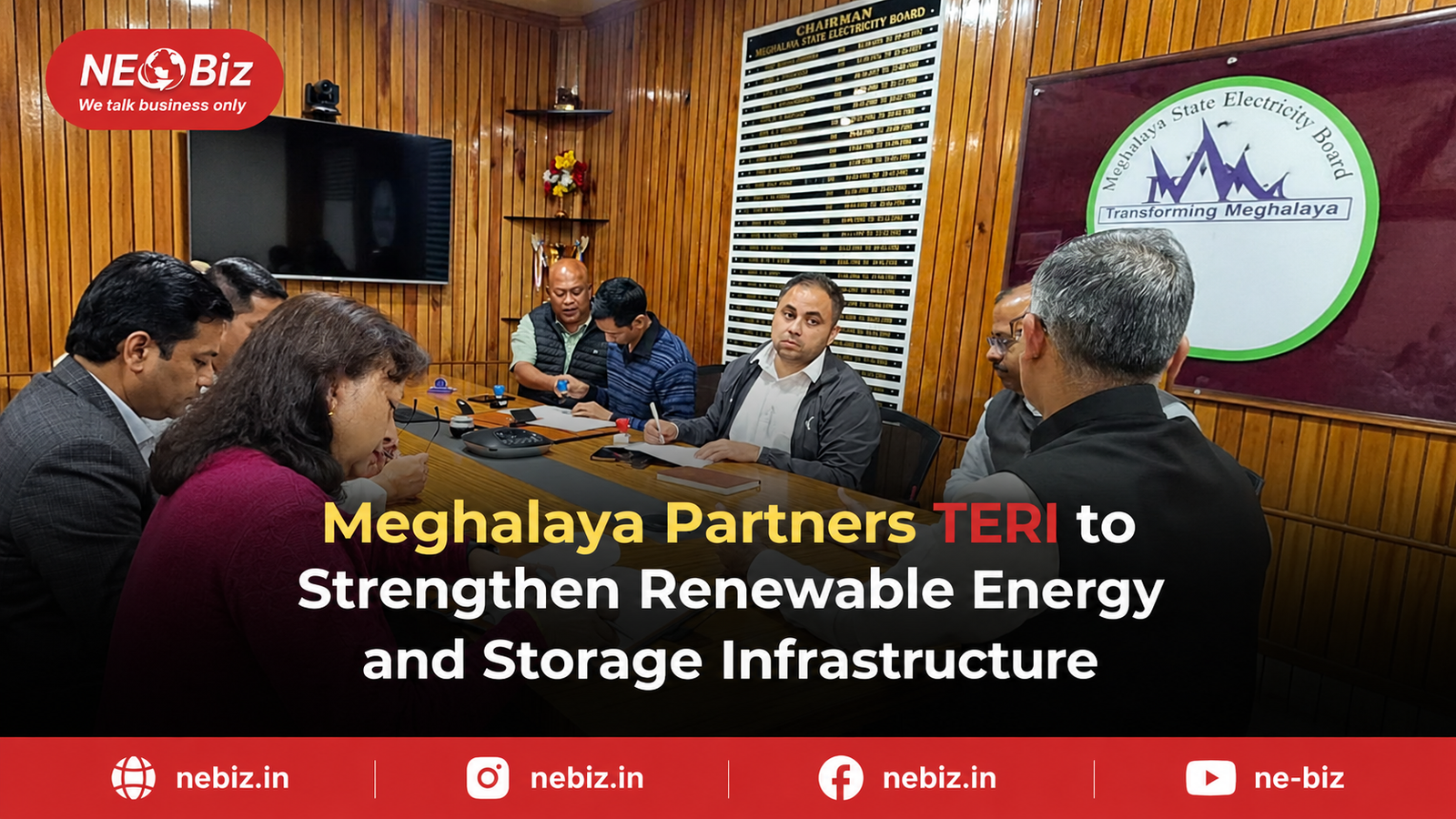
Meghalaya is taking steps to strengthen its renewable energy sector and improve electricity system reliability through a three-year partnership between the Meghalaya Energy Corporation Limited (MeECL) and The Energy and Resources Institute (TERI). The two organisations have signed a Memorandum of Understanding (MoU) in Shillong to collaborate on renewable energy planning, energy storage solutions, electricity demand forecasting and technical capacity building.
The partnership aims to support Meghalaya in building a more efficient and sustainable power system by combining TERI’s research and technical expertise with the operational experience of MeECL and its subsidiaries. These include the Meghalaya Power Distribution Corporation Limited, Meghalaya Power Transmission Corporation Limited and Meghalaya Power Generation Corporation Limited, which play important roles in the state’s electricity distribution, transmission and generation network.
A key area of collaboration will be assessing Meghalaya’s present and future electricity requirements and identifying suitable energy storage technologies. As renewable energy sources become an increasingly important part of the power mix, storage systems can help address fluctuations in generation and ensure that electricity is available when demand rises or renewable output declines. Such solutions can also support better coordination between energy generation and consumption.
The agreement will also cover renewable energy capacity planning, integrated demand and supply forecasting, and resource adequacy studies. These assessments can help the state evaluate its future power requirements, identify infrastructure gaps and make informed decisions about energy resources. Improved planning will be particularly important as Meghalaya explores opportunities to expand clean-energy generation while maintaining a stable and dependable electricity supply.
Energy efficiency and demand-side management are additional priorities under the partnership. These measures can help utilities understand consumption patterns, manage peak demand and encourage more efficient use of electricity. The collaboration also includes training and capacity-building initiatives for officials of distribution utilities and other stakeholders, supporting the development of technical expertise required to manage an evolving energy system.
Sanjay Goyal, Commissioner and Secretary of the Power Department and Chairman-cum-Managing Director of MeECL, highlighted the potential of combining distributed renewable energy with storage solutions, particularly in northeastern states where electricity supply costs can be high. TERI’s Electricity and Renewables Division has also emphasised the importance of technical assistance and continued capacity building as power utilities adapt to emerging technologies and changing energy requirements.
The collaboration comes at a time when energy storage, grid modernisation and renewable energy integration are becoming increasingly important to the power sector. For Meghalaya, the initiative could provide a stronger technical foundation for evaluating clean-energy projects, improving electricity planning and identifying practical solutions to the challenges faced by its power utilities.
From a business perspective, the agreement highlights the growing role of research institutions and public-sector utilities in supporting the clean-energy transition. Better planning and technical assessments could help create opportunities for future investment in renewable energy, storage infrastructure and related services. However, the actual scale of these opportunities will depend on the findings of the studies, the technologies selected and the implementation of future projects.
For the wider Northeast, Meghalaya’s partnership with TERI reflects the importance of strengthening regional energy infrastructure while exploring more sustainable ways to meet rising electricity needs. The three-year collaboration establishes a framework for technical cooperation and knowledge sharing, with its long-term impact depending on how effectively the proposed assessments and recommendations are translated into action.