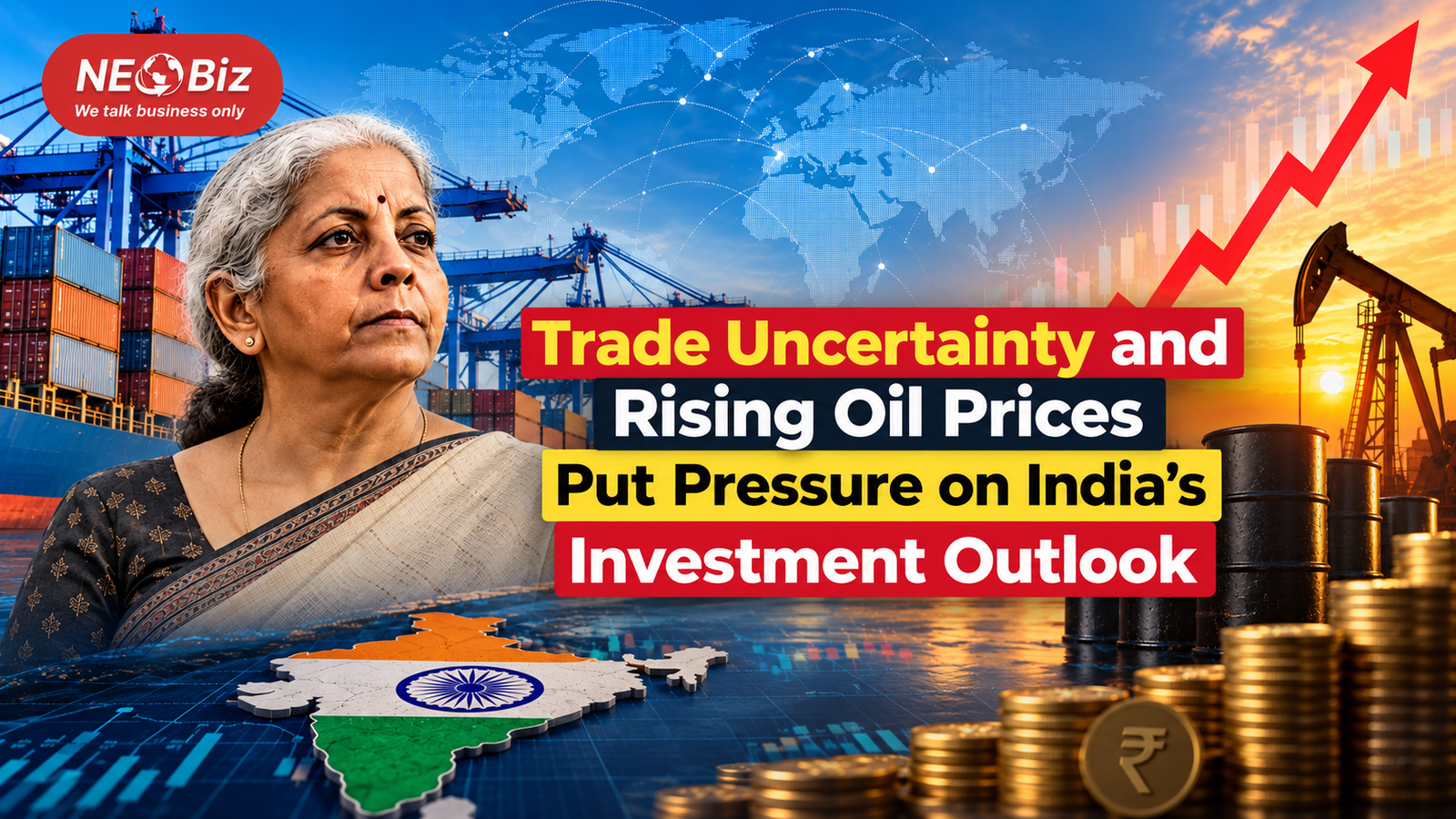
India’s investment outlook is facing pressure from growing uncertainty in global trade and rising crude oil prices, creating challenges for businesses, manufacturers and investors. These external factors could influence investment decisions, operating costs and economic activity, particularly in sectors that depend heavily on imported energy, international supply chains and overseas markets. The developments highlight the influence of global economic conditions on India’s domestic business environment and its ability to attract fresh investment.
India remains closely connected to international markets through its trade relationships, energy imports, manufacturing activities and financial flows. Changes in global commodity prices and trade policies can therefore have a direct or indirect impact on domestic industries. When uncertainty increases in international markets, businesses may reassess their expansion plans, reconsider investment timelines and adopt a more cautious approach to capital expenditure.
One of the key concerns is the rise in crude oil prices. As a major importer of crude oil, India is exposed to fluctuations in international energy markets. Higher prices can increase the country's overall import expenditure, placing pressure on the trade balance and potentially affecting inflation. The impact can extend across several sectors, including transportation, logistics, aviation, chemicals, manufacturing and other industries that depend on petroleum products or energy-intensive production processes.
For businesses, rising oil prices can translate into higher costs for moving raw materials, transporting finished products and operating industrial facilities. Companies may find it difficult to absorb these additional expenses, particularly when competition limits their ability to increase prices. As a result, profit margins can come under pressure, potentially influencing hiring decisions, production levels and future investment plans.
The transportation and logistics sectors are particularly sensitive to changes in fuel prices. Higher diesel and aviation fuel costs can increase expenses for road freight operators, airlines, shipping companies and distribution networks. These additional costs may eventually affect the prices of goods and services, placing pressure on businesses and consumers alike. For companies operating on narrow margins, sustained increases in fuel prices can create significant financial challenges.
Rising energy costs can also affect the manufacturing sector, where electricity, fuel and transportation account for an important share of operating expenditure. Industries such as steel, cement, chemicals and other energy-intensive businesses may face higher production costs when international energy prices increase. Businesses that depend on imported raw materials could experience additional pressure if higher commodity prices coincide with currency fluctuations or disruptions in global supply chains.
Alongside energy-related concerns, uncertainty surrounding international trade policies is creating another challenge for investment planning. Changes in tariffs, import regulations and trade restrictions can affect the cost of doing business across borders. Companies that export goods or source components from overseas markets must account for the possibility of changing trade conditions when preparing production schedules, negotiating contracts and deciding where to allocate capital.
Unpredictable trade policies can also influence the decisions of multinational companies considering new manufacturing facilities or investments in emerging markets. Businesses generally evaluate market access, regulatory stability, infrastructure, labour availability and operating costs before committing substantial capital. When international trade conditions become uncertain, companies may take additional time to assess potential risks before proceeding with large-scale investments.
For India, attracting investment remains important for expanding industrial capacity, strengthening infrastructure, generating employment and supporting long-term economic growth. Foreign direct investment can provide businesses with access to capital, technology, international markets and specialised expertise. Domestic investment also plays a significant role in developing manufacturing facilities, logistics networks, energy infrastructure and digital services. External economic pressures can influence the pace and direction of these investment activities.
The combined impact of higher oil prices and trade uncertainty may be particularly relevant for businesses that operate across multiple countries. Companies must consider not only domestic demand but also the cost of imported inputs, access to export markets and the stability of international supply chains. A change in any of these factors can influence profitability, pricing strategies and decisions regarding future expansion.
Small and medium-sized enterprises may face additional challenges because they often have fewer financial resources to absorb sudden increases in operating costs. Higher transportation expenses, expensive raw materials and uncertain demand can place pressure on working capital. Businesses with limited access to affordable financing may respond by delaying expansion, reducing discretionary expenditure or reviewing their procurement and distribution arrangements.
At the same time, changing global conditions can encourage businesses to reassess their supply chains and explore alternative sourcing arrangements. Companies may seek to reduce their dependence on individual markets, improve operational efficiency and strengthen domestic production capabilities. For Indian manufacturers, these adjustments could create opportunities in selected industries, although the benefits will depend on competitiveness, infrastructure, access to finance and the ability to meet international quality standards.
Energy security is another important consideration for India's economic outlook. Greater diversification of energy sources, improvements in energy efficiency and investment in alternative energy infrastructure can help reduce exposure to fluctuations in international oil markets over time. However, such changes require investment, technological development and coordination across different sectors of the economy.
Government policies and broader economic conditions will also influence how businesses respond to these challenges. Predictable regulations, infrastructure development, efficient logistics and stable investment conditions can help companies manage uncertainty. Businesses, meanwhile, may focus on cost control, supply-chain diversification and careful capital allocation to protect their operations against external shocks.
The effect of global trade uncertainty and higher oil prices on India's investment appeal will ultimately depend on how these pressures develop and how businesses and policymakers respond. Changes in international energy markets, trade negotiations and global demand will remain important factors for companies evaluating investment opportunities in the country.
For investors and businesses, monitoring these developments will be essential when assessing costs, risks and future growth prospects. Although external economic pressures can create uncertainty, India's investment outlook will also depend on domestic demand, industrial development, policy stability and the capacity of businesses to adapt to changing global conditions.