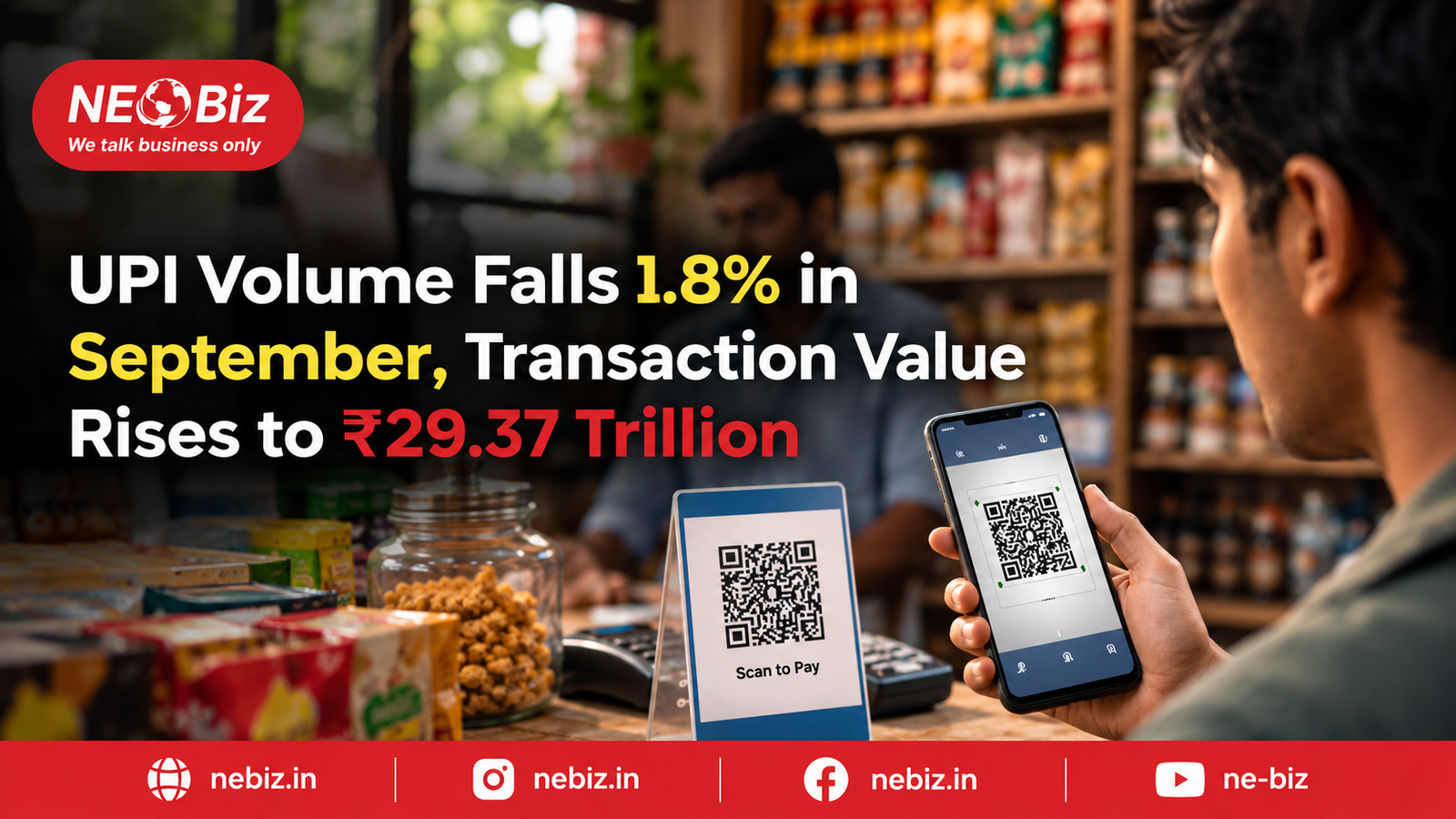
India’s Unified Payments Interface (UPI) recorded a slight decline in transaction volume in September 2026, processing 24.07 billion transactions compared with 24.51 billion in August. This represents a month-on-month decrease of approximately 1.8%, according to data shared by the National Payments Corporation of India (NPCI), which operates the country’s UPI network. Despite the drop in transaction numbers, the overall value of payments continued to increase, reflecting the sustained use of digital payments across the country.
The total value of UPI transactions rose by 1.5% in September to ₹29.37 trillion, up from ₹28.92 trillion in the previous month. The increase suggests that although fewer transactions were recorded during the month, the aggregate amount transferred through the platform remained on an upward trajectory. UPI has become an important part of India’s digital payments infrastructure, enabling individuals, small businesses, retailers and large merchants to conduct instant financial transactions through mobile applications and QR codes.
September also marked a significant milestone for the digital payments ecosystem, with UPI recording approximately 802 million transactions per day, equivalent to a daily transaction value of around ₹9,713 crore. This was the first time that daily UPI payments crossed the 800-million mark, highlighting the scale at which digital payment services are being used for everyday purchases, bill payments, money transfers and business transactions. From neighbourhood grocery stores to organised retail outlets, QR-based payments have become increasingly common, reducing the need for cash and providing consumers with a convenient payment option.
However, the latest transaction figures come amid discussions surrounding the proposed Merchant Discount Rate (MDR) on certain UPI merchant transactions. The planned rollout, scheduled for October 15, has raised concerns among sections of the trading community regarding the potential impact of payment processing charges on businesses. MDR refers to the fee associated with processing digital payments, which can affect the costs incurred by merchants depending on the applicable transaction category and payment arrangement.
Any changes to merchant payment charges could have implications for retailers, service providers and other businesses that rely heavily on digital transactions. Small merchants, in particular, may closely monitor the potential financial impact of such changes, as payment costs can influence their operating expenses and decisions about which payment methods to accept. At the same time, the effect of the proposed framework will depend on the transactions covered, the applicable rates and how the system is implemented.
The September figures illustrate the continued expansion of digital payments in India, even as monthly transaction volumes experience short-term fluctuations. The rise in transaction value and the record in daily payment volumes indicate that UPI continues to play a central role in the country’s shift towards digital financial services. Going forward, merchant participation, transaction costs, consumer adoption and regulatory developments are likely to remain important factors shaping the platform’s growth.
For businesses, the evolving UPI ecosystem presents both opportunities and considerations. Digital payments can improve convenience, speed up transactions and reduce dependence on cash handling. However, merchants will also need to assess any changes in payment-related expenses and their potential effect on business operations. As India’s digital payments market continues to develop, the balance between expanding adoption, maintaining affordability and supporting merchant participation will remain important to the long-term growth of UPI.