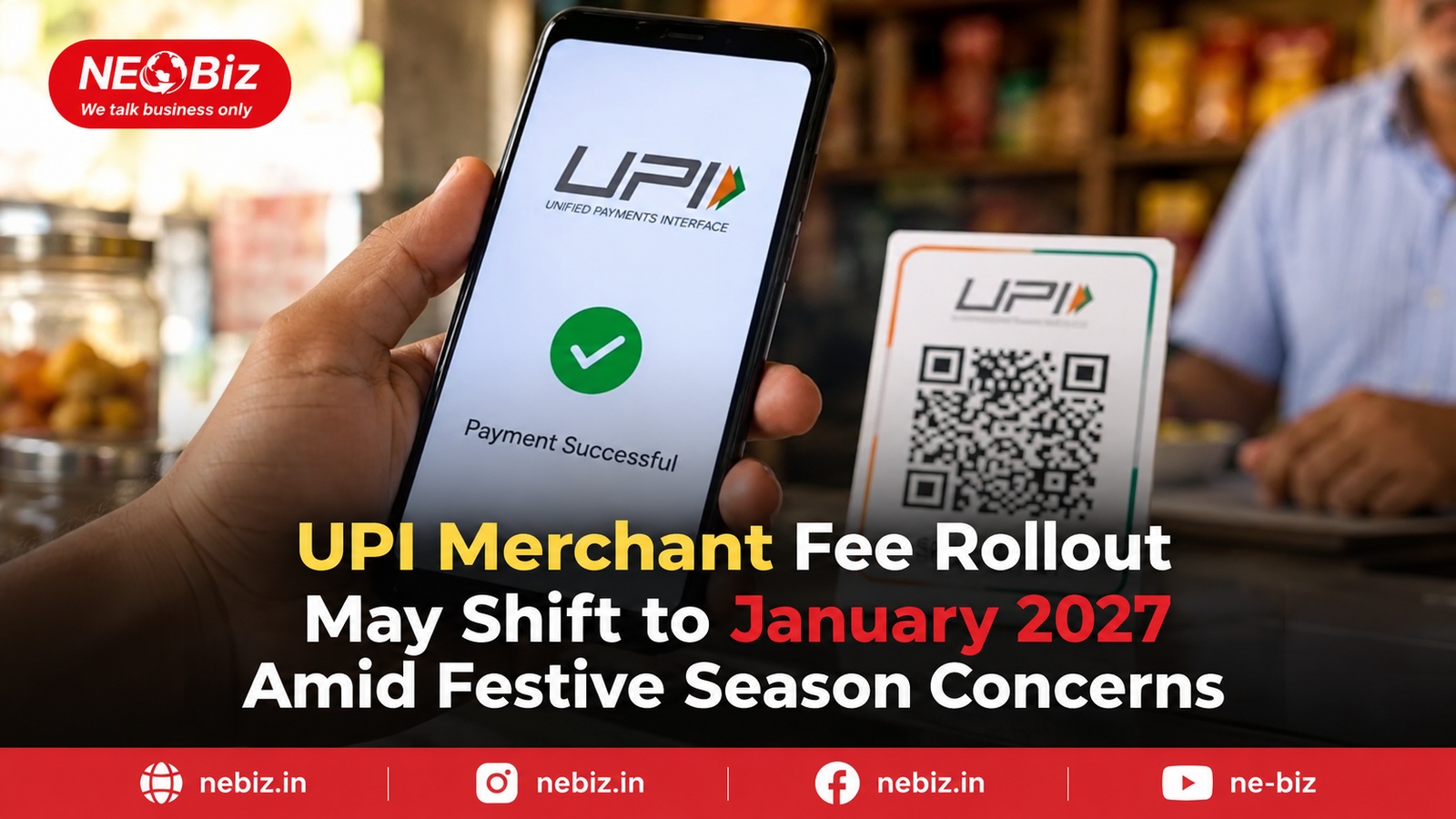
The proposed introduction of a Merchant Discount Rate (MDR) on select UPI transactions could be pushed back by a few months, with January 1, 2027, emerging as a possible new implementation date. The proposed delay comes ahead of India’s busy festive shopping period, when digital payments typically see a substantial increase in activity. However, the postponement has not been finalised and discussions are still underway.
The new MDR framework was originally scheduled to come into effect from October 15, 2026. Under the proposal, a 0.4% charge would apply to eligible person-to-merchant UPI transactions above ₹2,000. The proposed fee would be paid by merchants rather than being charged directly to consumers.
For larger transactions, the framework includes a cap. Payments of ₹75,000 or more would carry a maximum MDR of ₹300. Person-to-person UPI transfers are outside the proposed charge, while small merchants are also expected to remain exempt under the current framework.
The possible postponement is primarily linked to the timing of the proposed rollout. October marks the beginning of one of the most important retail periods in India, with festive shopping driving higher activity across physical stores and online platforms. Merchant groups and payment industry participants have raised concerns about introducing a new transaction cost at a time when businesses are preparing for increased sales volumes.
According to reports, merchant organisations, fintech companies and other participants in the payments ecosystem have asked the National Payments Corporation of India (NPCI) for additional time. Among their concerns are questions about the application of different MDR rates, transaction categories and the readiness of businesses and payment companies to implement the new system.
A delay would give merchants and payment companies more time to prepare their technology systems and operational processes. It could also allow banks, payment aggregators and other stakeholders to settle outstanding questions regarding the distribution of MDR revenue before the framework takes effect on a wider scale.
The proposed MDR represents a significant change for India's digital payments industry. UPI has operated for years without a conventional merchant transaction fee, supported in large part by government incentives and the broader digital-payments ecosystem. Introducing a charge for certain higher-value merchant transactions is intended to create a revenue stream within an infrastructure that processes enormous payment volumes every day.
The scale of UPI makes the change particularly important for businesses. UPI processed about 802 million transactions a day on average in September, with average daily transaction value reaching around ₹97,913 crore, according to Business Standard.
For merchants, the financial impact would depend on transaction size and volume. At a rate of 0.4%, a ₹10,000 eligible transaction would generate an MDR of ₹40. While that amount may appear relatively small for an individual transaction, the cumulative cost could become significant for businesses handling a large number of high-value digital payments.
The proposed framework also has implications for payment companies and banks. Payment aggregators have been negotiating with sponsor banks over how the revenue generated from MDR should be divided. Industry discussions have reportedly focused on payment aggregators seeking a substantial portion of the acquiring bank's share.
The possibility of postponement has also attracted attention in financial markets. Digital payment companies were expected to benefit from the introduction of MDR because it would create a new source of revenue. Reports of a potential delay therefore triggered declines in shares of some listed payment companies, reflecting investor expectations around the timing of additional income.
For consumers, the proposed change is somewhat different from a direct UPI usage fee. The MDR is designed as a merchant-side charge, meaning consumers are not expected to pay an additional 0.4% simply for making an eligible UPI payment. NPCI has also maintained that the charge should not be passed on to customers.
The Reserve Bank of India has also sought to reassure the market about the potential impact on UPI usage. RBI Governor Sanjay Malhotra said he did not expect the introduction of a relatively small charge to cause a major decline in transaction volumes. UPI's widespread adoption and convenience remain important factors supporting continued digital-payment growth.
At the same time, the rollout is facing broader scrutiny. The proposed MDR framework has been subject to legal challenges, although the Supreme Court recently declined to stay its implementation. This adds another layer of complexity as regulators, banks, payment companies and merchants prepare for the new payment economics.
If the implementation is ultimately shifted to January 2027, the delay would provide the industry with additional time to resolve operational issues while allowing merchants to navigate the festive season under the existing UPI payment structure. It would also give businesses more time to understand how the new system could affect their payment costs and cash-flow calculations.
The development highlights the evolving economics of India's digital payments industry. As UPI becomes increasingly embedded in retail, services and business transactions, questions around who bears the cost of maintaining the payment infrastructure and how payment companies generate sustainable revenue are becoming more important.
For now, the January 2027 date remains a possibility rather than a confirmed change. NPCI and other stakeholders are expected to take a final call after discussions with the relevant authorities and industry participants. Until an official decision is announced, the proposed October 15 rollout and the possibility of a January deferment remain under consideration.